Punjab Stakeholders Forge Integrated Action Agenda for Crop Residue Management
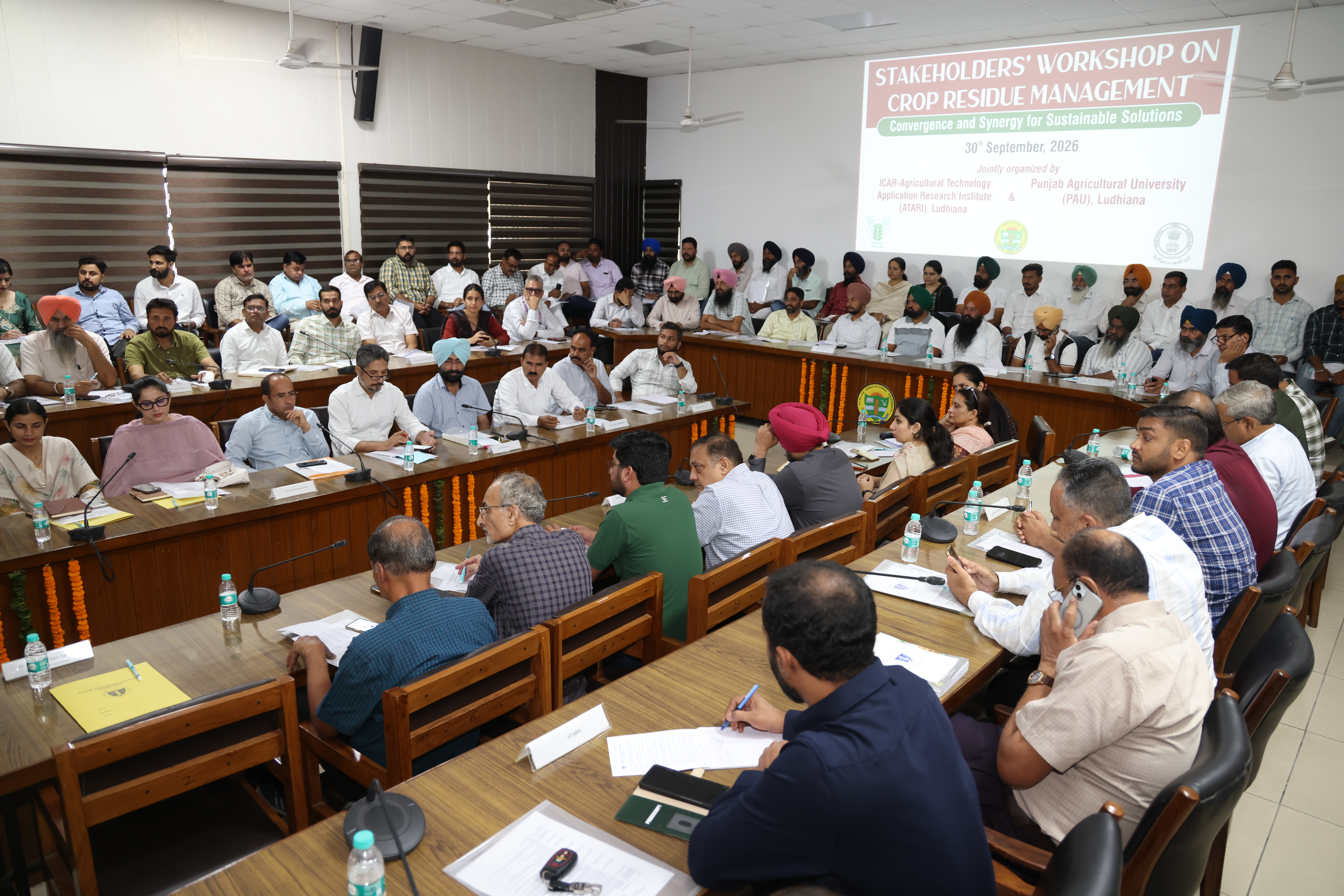
Ludhiana, 30 September 2026: A high-level “Stakeholders’ Workshop on Crop Residue Management: Convergence and Synergy for Sustainable Solutions” was organized by ICAR-ATARI, Ludhiana, at Punjab Agricultural University (PAU), Ludhiana, bringing together policymakers, scientists, extension agencies, farmers, farmer organizations, machinery manufacturers, Custom Hiring Centres (CHCs), service providers, NGOs/civil society organizations and industry representatives to deliberate on a coordinated strategy for crop residue management.
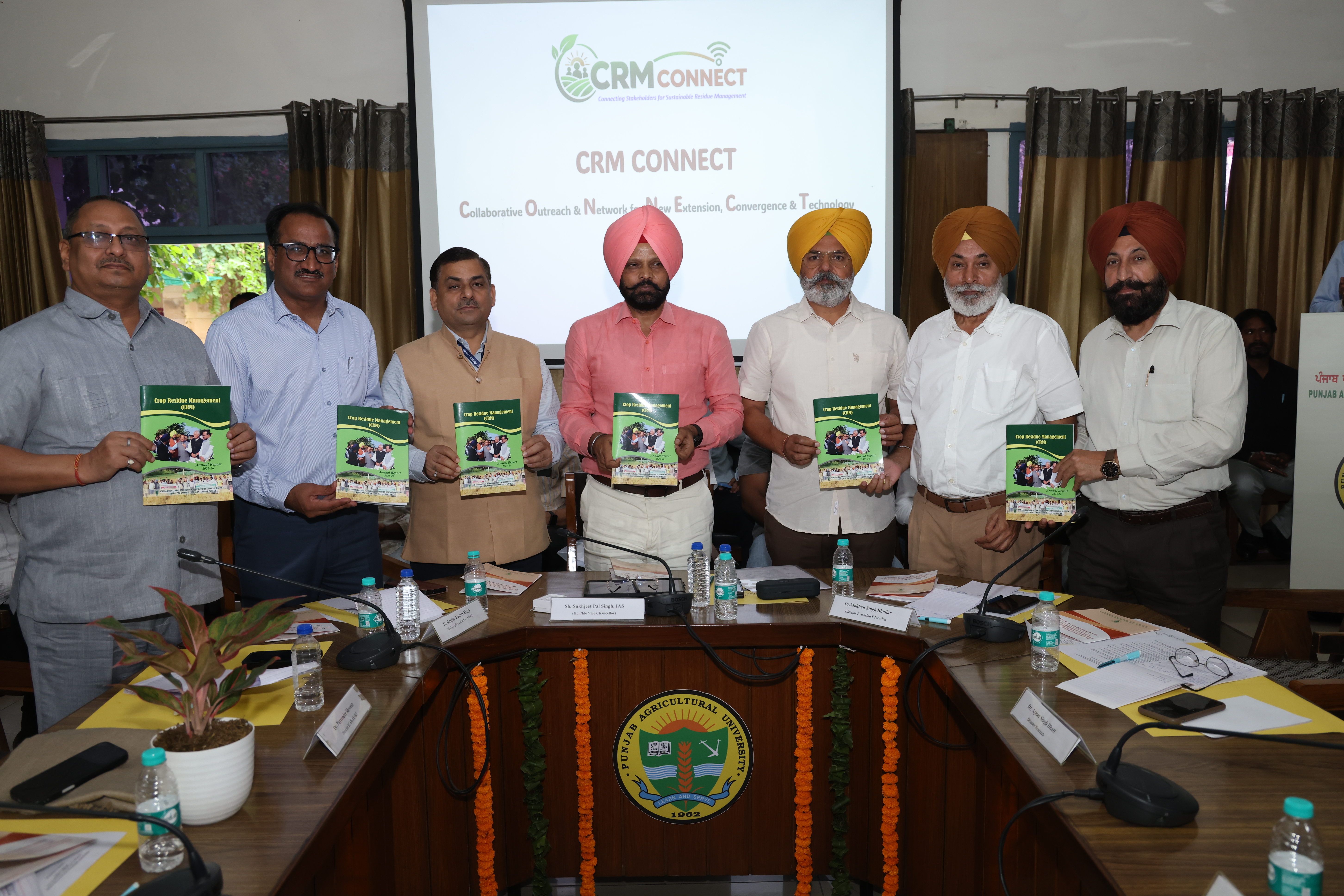
Sh. Sukhjeet Pal Singh, IAS, Vice-Chancellor, PAU, Ludhiana, was the Chief Guest, while Dr. Ranjay Singh, ADG (Extension), ICAR, was the Guest of Honour. Other dignitaries included Dr. Parvender Sheoran, Director, ICAR-ATARI, Ludhiana; Dr. J. P. Mishra, Director, ICAR-ATARI, Jodhpur; Dr. M. S. Bhullar, Director of Extension Education, PAU; and Dr. Ajmer Singh Dhatt, Director of Research, PAU.
The deliberations covered five key themes across the CRM value chain: in-situ management through mechanization, CHCs and technology solutions; ex-situ management through biomass aggregation, value addition, energy and carbon opportunities; reducing residue generation through crop diversification and sustainable agriculture; farmer adoption through awareness, incentives, community action and enforcement; and convergence through policy, partnerships, financing and coordinated action.
The workshop noted Punjab’s significant progress in reducing crop-residue burning. It emphasized that the next phase should focus on efficient utilization and optimal deployment of existing CRM machinery, with district-wise matching of machine capacity to actual demand. With about 31.76 lakh hectares under paddy and nearly 20 million tons of straw generation, participants stressed the need for soil- and crop-specific machinery selection, digital mapping, improved CHC coordination, and expanded baler tracking.
Discussions also highlighted paddy straw's potential for bioenergy, CBG, industrial applications, and carbon markets, while identifying challenges related to aggregation, transportation, storage, economics, and assured biomass offtake. Participants stressed the need for viable biomass supply chains and appropriate nutrient replenishment where straw is removed from fields for ex-situ utilization.
Sh. Sukhjeet Pal Singh, VC, PAU, Ludhiana, emphasized the need to strengthen evidence-based solutions through continuous research, field validation, and systematic documentation of successful CRM practices. He highlighted the role of PAU in providing scientific support and developing scalable solutions for Punjab’s residue-management challenges.
Dr. Ranjay Singh, ADG (Extension), ICAR, emphasized stronger convergence among ICAR institutions, extension agencies and field stakeholders, and highlighted the need to effectively take proven technologies and research outcomes to farmers through coordinated extension efforts.
Dr. Parvender Sheoran, Director, ICAR-ATARI, Ludhiana, highlighted the need to move from a machine-centric approach towards a demand-driven, location-specific and convergence-based CRM strategy. He stressed coordinated action among KVKs, farmers, CHCs, machinery manufacturers, service providers and industry, and proposed CRM CONNECT as a common platform for coordinated outreach, technology deployment and stakeholder action.
A key outcome of the workshop was the proposal for “CRM CONNECT - Collaborative Outreach & Network for New Extension, Convergence & Technology.” The platform is envisaged to bring stakeholders together for coordinated planning, shared field calendars, technology dissemination, data sharing, and timely resolution of field-level challenges.
The workshop concluded with a commitment to operationalize CRM CONNECT and strengthen collaborative action for sustainable crop residue management, with the shared objective of further reducing residue burning and promoting cleaner, resource-efficient agriculture in Punjab.