Union Agriculture Minister Champions Punjab’s Crop Residue Management Model at Ransinh Kalan, Moga
Moga/Ludhiana, Punjab, 27 November 2025
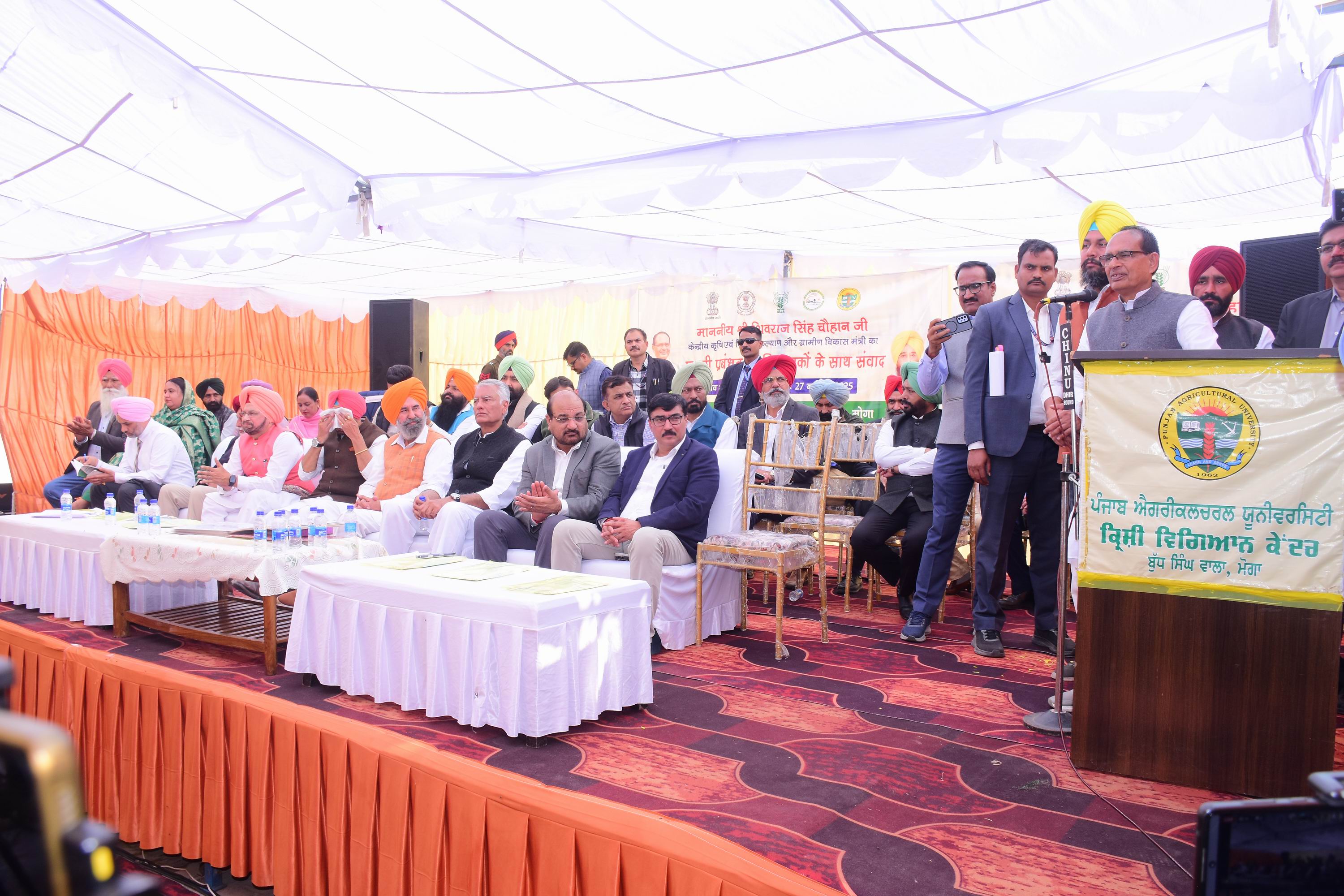
ICAR–Agricultural Technology Application Research Institute (ATARI), Ludhiana organised a flagship programme “Stakeholders’ Dialogue on Crop Residue Management” on 27 November 2025 at village Ransinh Kalan in Moga district, in collaboration with Punjab Agricultural University (PAU), Ludhiana and KVK, Moga. The event gained national momentum as the Union Minister for Agriculture and Farmers’ Welfare, Shri Shivraj Singh Chouhan ji, graced the programme with his presence, guidance and extensive field-level outreach. The programme witnessed extraordinary participation, with around 1,000+ farmers and farm-women from 17 villages across four Punjab districts attending the deliberations.
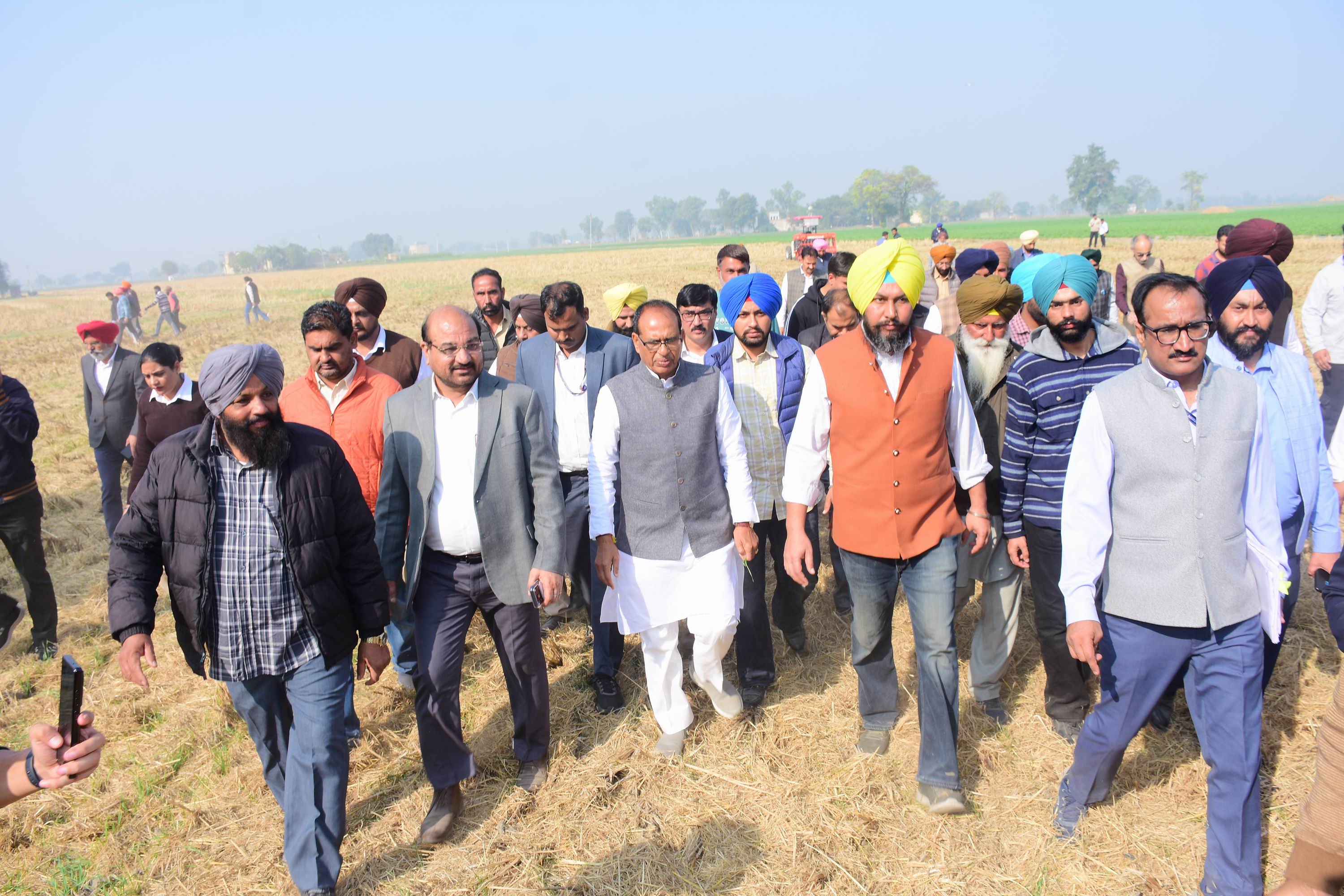
Seeking blessings before the formal proceedings, Shri Chouhan paid obeisance at the main Gurudwara Sahib of Ransinh Kalan, followed by planting a sapling, symbolising his commitment to environmental protection and agricultural prosperity. Ransinh Kalan has set a remarkable example by ensuring 100% of its 1,310-acre cultivated area remains residue burning-free for six consecutive years, demonstrating full adoption of in-situ crop residue management technologies. During his field inspection, the Minister visited wheat fields of S. Gopal Singh, sown using the Happy Seeder, and held detailed technical discussions with S. Avtar Singh, who incorporates paddy straw for potato cultivation, and S Jagsir Singh, who follows residue incorporation in mustard. The Minister conducted an in-depth socio-economic and agronomic assessment, emphasising that residue incorporation enhances soil organic carbon, fertility, input-use efficiency and long-term farm sustainability.
Addressing media and farmers, Shri Chouhan expressed deep satisfaction at the village’s technological and community-driven transformation, driven by youth leadership, public participation and institutional convergence. He praised local governance under innovative Sarpanch, S. Inderpreet Singh of the Gram Panchayat, noting that the village stands out for its sewage treatment plant, recharge ponds, recharge ponds, knowledge library, cultural library, cleanliness drive and well-maintained rural infrastructure, making it a true model for national emulation. Highlighting Punjab’s dramatic progress, the Minister stated that farm burning incidents have dropped to less than 5,000 this year, compared to more than 83,000 fire events reported four years ago, marking an unprecedented grassroots behavioural shift. He also noted that residue burning incidents have dropped by 95% in 2025 compared to last year, signalling transition towards burning aversion and environmental resilience across the state. He strongly advocated paddy straw incorporation in potato-growing belts and emphasised crop diversification as a sustainability pathway, aligning residue management with soil health restoration, oilseed-based value addition and enhanced farmer livelihoods.
Presenting a national outlook soon after, Dr. M.L. Jat, Secretary, DARE and Director General (DG), ICAR, New Delhi, described Punjab’s efforts as a milestone in sustainable agriculture, environmental security and nation building. He highlighted that burning-free villages reduce import-dependent fertilizer needs, improve soil biology, conserve groundwater and mitigate greenhouse gas emissions, adding that the ICAR–ATARI and KVK extension system has played a pivotal role in bringing long-term behavioural transformation and technology-led impact. The DG was supported during technical briefings by Dr. Rajbir Singh, DDG (Agricultural Extension), ICAR, and Dr. Parvender Sheoran, Director, ICAR-ATARI, Ludhiana, who apprised the Minister on the decadal trend of declining stubble burning events due to structured extension interventions.
The vote of thanks was delivered by Dr. Rajbir Singh, DDG (Agricultural Extension), ICAR, who commended KVK Moga and the village Panchayat, urging horizontal expansion of this model to achieve a residue burn-free Moga district and scale it to neighbouring villages.
The programme concluded with a Minister-led field visit and a media briefing, reinforcing a unified resolve towards clean air, nutrient-rich soils, judicious input use, crop diversification, youth-led sustainability and farmer-centric rural transformation in Punjab.